
Custom automation and off-the-shelf automation are popular solutions in the manufacturing world. While there is no right or wrong solution per say, it is important to choose one that best fits your operation. So how do you choose the right one?
Here’s everything you need to know:
What Is Custom Automation?
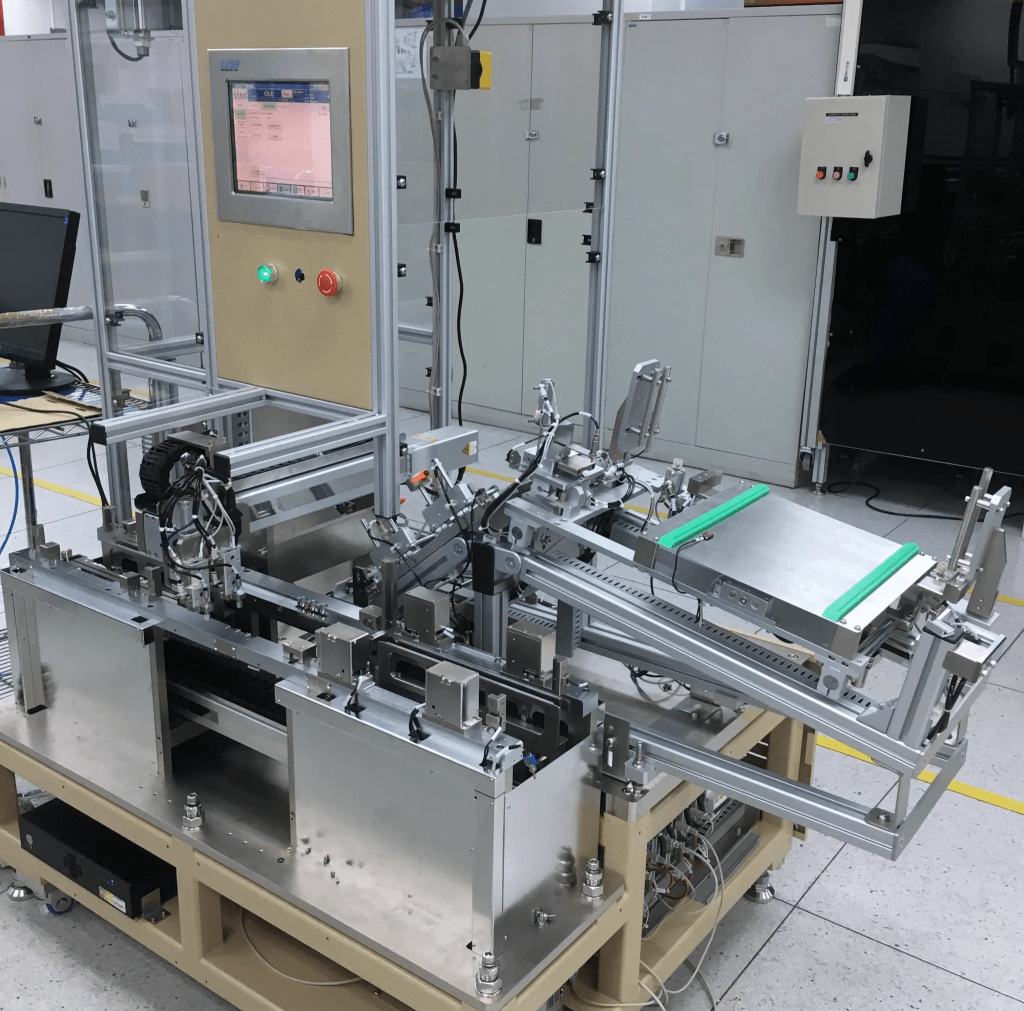
Custom automation or customised automation is a tailor-made system designed specifically for your business. Some common uses include:
- Inventory automation for real-time stock tracking
- Supply chain automation to reduce delays
- Customer support automation for faster responses
- Custom CRM automation to manage client relationships
Unlike generic tools, these systems are built from scratch to perfectly match your operations.
For example, a high-tech manufacturing company may require sub-micron positioning or specialised cleanroom handling sub-micron positioning or specialised cleanroom handling for delicate components.
In this case, custom automation allows you to design a system specifically for this. This gives you greater flexibility, as you are not adapting your business to the system.
By leveraging expertise in motion control, vision, IoT and systems integration, the system is built for you which often results in better efficiency and productivity. However, custom automation does come with higher upfront costs and longer development time.
It also requires close collaboration with engineers and developers to ensure everything works as intended.
What Is Off-the-Shelf Automation?
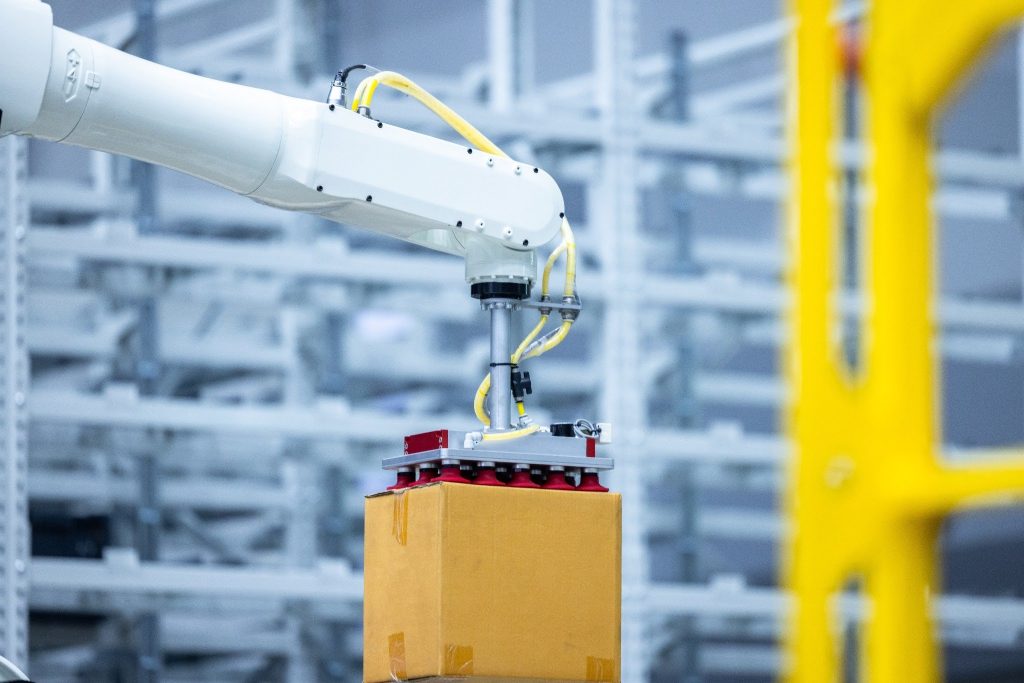
Off-the-shelf automation are ready-made software systems designed for general use. These solutions are pre-built and can be implemented quickly. Some common uses include:
- Marketing automation tools for email campaigns
- Accounting software for financial management
- Customer service platforms like Zendesk or Freshdesk
- Project management tools such as Trello
These systems are designed based on common industrial applications and they are convenient options for companies that want to automate standard production processes quickly.
For example, instead of building a ticketing system from scratch, a business can subscribe to an existing platform and use it almost immediately. One of the biggest advantages of this solution is its lower initial cost and faster deployment.
Since the system is already built and tested, businesses can implement the system immediately, saving time and upfront R&D expenses. However, off-the-shelf solutions may not always fit high-precision manufacturing specs perfectly.
Since they are built for a wide range of users, you may need to adjust your operations to match the system. This can sometimes lead to inefficiencies, especially for businesses with complex or proprietary manufacturing operations.
Key Differences Between Custom Automation and Off-the-Shelf Automation
Flexibility
Custom automation systems are designed to fit your specific needs. This offers maximum flexibility as you can easily integrate these solutions without compromising your workflow. On the other hand, off-the-shelf automation comes with fixed features.
While some tools offer customisation options, they are still limited compared to a fully customised system.
Cost
Off-the-shelf automation typically has a lower upfront cost, making it more accessible for small to medium-sized businesses. Most solutions operate on a subscription basis, which helps manage cashflow.
In contrast, custom automation requires a higher initial investment due to development and implementation. This can be more cost effective in the long run however, especially if the system significantly improves.
Implementation
Off-the-shelf automation is a clear choice if speed is your priority. These systems can be deployed almost immediately. Custom automation, however, takes time to design, develop and test.
Depending on its complexity, it may take weeks or even months to reach full-scale, high-precision operational capacity.
Scalability
Custom automation is highly scalable because it’s engineered to support your business growth. As your business expands, the system can be adjusted accordingly.
Off-the-shelf solutions can also scale, but they often face throughput ceilings and integration limitations.
Integration
Custom automation allows seamless integration with your existing systems. This ensures smooth real-time data flow and synchronized motion control across your operations.
Off-the-shelf tools usually support common integrations, but may struggle with more complex or niche systems.
Maintenance
With off-the-shelf automation, maintenance and updates are handled by the service provider, which reduces the burden on your team. Custom automation, however, requires ongoing maintenance, updates either from your in-house team or external developers.
Custom Automation vs Off-the-Shelf Automation: Comparison Table
| Feature | Custom Automation | Off-the-Shelf Automation |
| Flexibility | Fully customised to your specific business needs and workflows | Limited flexibility with predefined features |
| Cost | Higher upfront cost but potentially better long-term ROI | Lower initial cost with subscription-based pricing |
| Implementation | Takes longer to design, develop and test | Quick and easy deployment |
| Scalability | Highly scalable and adaptable as your business grows | Scalable, but may face limitations depending on the platform |
| Integration | Seamless integration with existing and complex systems | Supports standard integrations but may struggle with niche requirements |
| Maintenance | Requires ongoing support from developers or in-house teams | Managed by the service provider |
Which One Should You Choose?
Custom automation is suited for businesses that require operation-specific systems. These systems are highly flexible and scalable, designed according to your business needs.
While they can generate higher ROI over the long run through increased yields and throughput, they also require a larger upfront cost. Implementation time will take longer too, especially if you have complex requirements.
On the other hand, off-the-shelf automation is ideal for businesses that want quick and easy deployment. These systems can be integrated almost immediately and they are much cheaper than custom solutions.
They are limited in features and scalability however, especially for more generic platforms.
The Bottom Line
Choosing between custom automation and off-the-shelf automation largely depends on your production requirements and long-term scalability needs.
While both solutions can be effective, choosing the wrong one can lead to stagnant throughput and high re-tooling costs in your operations—so choose wisely by aligning your investment with your specific engineering requirements.
Visit mmi.weave.asia or contact us to find out more!