Factories have always been the backbone of manufacturing. For decades, they relied on manual labour and mechanical processes. Today, that model is shifting. Businesses need faster output, fewer delays, and more reliable systems.
For years, factories focused on scale and speed. Now, the focus has shifted to flexibility and efficiency, giving way to the smart factory. Often linked with Industry 4.0, it marks a new phase in how goods are designed and delivered.
Achieve faster production with industrial automation for your smart factory. Reach out to MMI Systems via email, call, or our contact form for any enquiries!
What Is a Smart Factory?
A smart factory is a production facility that connects machines, people, and systems through digital technology. Instead of relying only on manual input, it gathers data, analyses it, and uses the results to guide operations.
Three things make it stand out:
- Connectivity – equipment and systems share information in real time.
- Insight – data reveals how processes are running and where improvements are needed.
- Adaptability – systems adjust automatically to keep production on track.
The smart factory is often linked with Industry 4.0, a term that describes the digital transformation of manufacturing. Where past industrial revolutions introduced machines, electricity, and computers, Industry 4.0 integrates them all with data and automation.
Core Technologies Behind a Smart Factory
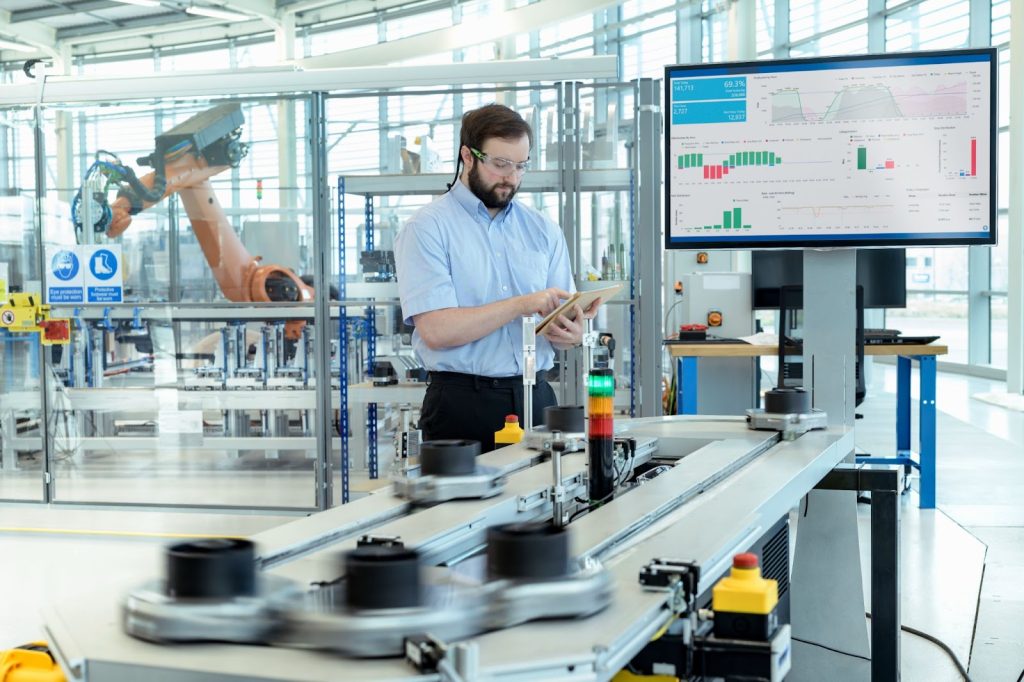
A smart factory runs on a mix of technologies that connect, analyse, and automate production. Each plays a specific role in keeping operations smooth.
- Internet of Things (IoT)
Machines, sensors, and devices link together to share data. This connection makes it possible to track everything from energy use to equipment performance. - Artificial Intelligence (AI) & Machine Learning (ML)
AI interprets the data, while ML recognises patterns and predicts what might happen next. For example, it can forecast when a machine will need maintenance. - Big Data & Cloud Computing
Factories generate huge amounts of information. Cloud platforms store and process this data, making it easy to access and analyse from anywhere. - Robotics & Automation
Robots handle repetitive or precise tasks. Automated systems take over routine steps, reducing delays and errors. - Cyber-Physical Systems
These link physical machines with digital models. The virtual side helps simulate and test changes before applying them in real production.
How Does a Smart Factory Work?
A smart factory works by linking machines, sensors, and systems into one connected network. As production runs, these tools capture data on performance, quality, and resource use. The information is then processed to show what is working well and what needs improvement.
Once the data is analysed, the system can act on it. If a machine begins to slow down, production is rerouted to another line. If energy use spikes, the system lowers consumption. If a fault appears, it sends an alert before the machine breaks down.
The process follows four steps:
- Collecting data from equipment, sensors, and processes.
- Analysing information using artificial intelligence and machine learning.
- Taking action automatically through connected systems and automation.
- Learning and improving so the factory becomes more efficient over time.
A smart factory works by using data not only to monitor production but also to make decisions that keep operations reliable and efficient.
Benefits of a Smart Factory
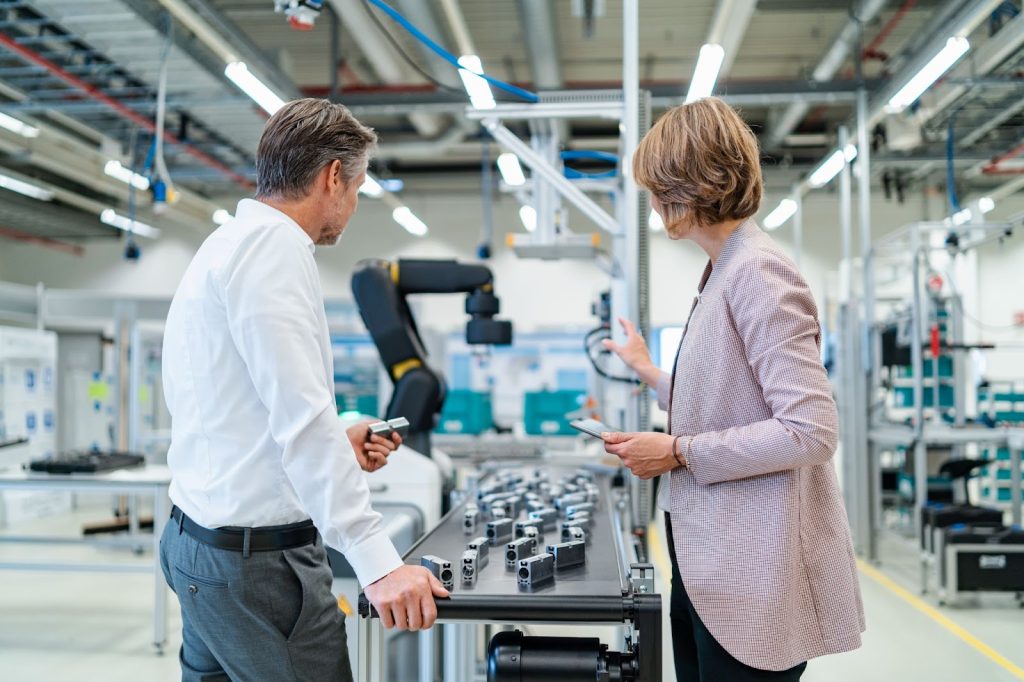
A smart factory combines data, connectivity, and intelligent systems to reshape production and deliver measurable improvements:
- Greater output
Automation and connected systems shorten production time and increase capacity. - Fewer breakdowns
Predictive maintenance spots early signs of wear, which prevents costly stoppages. - Consistent quality
Sensors track every stage of production, ensuring products meet set standards. - Lower operating costs
Better use of materials and energy reduces waste and expenses over time. - Reduced environmental impact
Efficient processes cut emissions, energy use, and unnecessary resource consumption.
Challenges of Implementing Smart Factories
Smart factories promise big gains, but the shift comes with hurdles that businesses must address:
- High upfront costs
Building the infrastructure, upgrading equipment, and integrating new systems require large investments. - Cybersecurity risks
Connected systems open more entry points for cyberattacks, making data protection critical. - Skill gaps in the workforce
Workers need training in digital tools, analytics, and system management, which takes time and resources. - Integration with legacy systems
Older machines and processes often do not connect easily with modern digital platforms.
Our Case Study: Intelligent Pick and Place Automation System
A precision manufacturing client required a more efficient and reliable method for handling and placing delicate components within a controlled production environment.
The existing process relied heavily on manual handling, which led to:
- Inconsistent placement accuracy
- High labour dependency
- Limited production scalability
- Inefficient use of controlled workspace
- Rising operational costs
As production demand increased, manual processes began to limit throughput and operational efficiency. The client needed an automated solution that could deliver precision, repeatability, and long-term cost optimisation.
A. The Solution
MMI Singapore designed and implemented a fully automated Intelligent Pick and Place System tailored to the client’s production requirements.
Key capabilities included:
- Transition from manual operation to full automation
- Integration of a vision inspection system for alignment accuracy
- Controlled force handling for delicate components
- Flexible configuration to support different placement requirements
- Cleanroom-compatible system design (where required)
- Scalable architecture to accommodate future expansion
The system combined mechanical engineering, electrical control design, and intelligent software integration to ensure consistent performance and reliability.
B. The Results
The automation implementation delivered measurable operational improvements:
- Reduction in manual labour requirements
- Lower labour-related costs
- Improved monthly productivity
- Enhanced placement consistency and quality control
- Optimised use of controlled production space
- Strong return on investment over time
By replacing manual handling with intelligent automation, the client achieved greater operational stability and positioned their production line for scalable growth.
C. Why This Matters
For manufacturers handling precision components, process consistency and efficiency are critical to long-term competitiveness.
This project demonstrates how intelligent automation can:
- Improve throughput without increasing headcount
- Enhance quality assurance through vision-guided systems
- Reduce operational costs
- Support sustainable, scalable production growth

Real-World Examples of Smart Factories
Several manufacturers have already built smart factories that show how digital systems transform production:
- Siemens (an advanced electronics plant in Amberg, Germany)
At its electronics plant in Amberg, Germany, Siemens runs a highly connected factory where machines and systems exchange data across every stage of production. This setup improves accuracy and keeps operations running with minimal errors. - Bosch (one manufacturer leverages smart factory technologies)
Bosch applies smart factory technologies to monitor energy use and predict equipment failures. The result is reduced downtime and better resource management across its facilities. - Tesla Gigafactory (a large-scale gigafactory integrates robotics, automation)
Tesla’s Gigafactories combine robotics, automation, and data-driven decision making to scale battery and electric vehicle production. Real-time monitoring allows the company to adjust processes on the spot.
These examples show that smart factories are already in operation, reshaping how products are designed, built, and delivered.
Conclusion
A smart factory is a connected system where machines, data, and people work together to make production more efficient. Through data analysis, automation, and self-improving processes, it enables manufacturers to cut downtime, improve quality, and reduce costs.
They are already changing how industries compete and how products reach the market. As new technologies like 5G and digital twins evolve, the role of smart factories will only grow.
Achieve faster production with industrial automation for your smart factory by using robots and automated systems to handle repetitive tasks, reducing delays and errors. Reach out to MMI Systems via email, call, or our contact form for any enquiries!